A few of my favorite reads…
CONTEMPORARY & CANONICAL ǁ NEW & OLD.
Fiction ※ Poetry ※ Nonfiction ※ Drama
Hi.
Welcome to LitReaderNotes, a book review blog. Find book suggestions, search for insights on a specific book, join a community of readers.
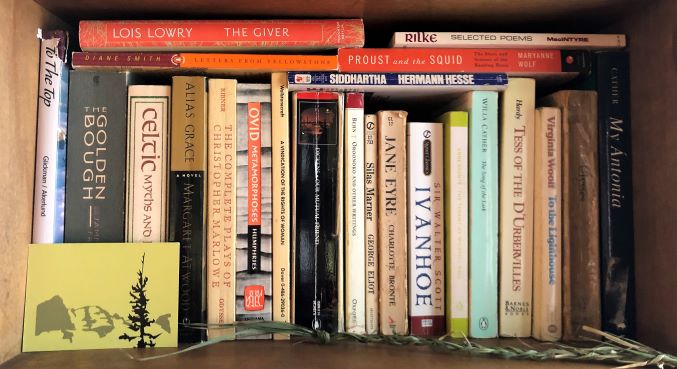
A few of my favorite reads…
CONTEMPORARY & CANONICAL ǁ NEW & OLD.
Fiction ※ Poetry ※ Nonfiction ※ Drama
Welcome to LitReaderNotes, a book review blog. Find book suggestions, search for insights on a specific book, join a community of readers.
One of José Saramago’s famous novels, Blindness (1995, English translation in 1997), explores the brutal fall-out of a world beset by a pandemic of blindness.
After reading it slowly over the course of nearly six months, I realized that Richard Powers’ The Overstory is in many ways a book that defies categorization. It is so novel in its craft and so touching in its humanity. The Overstory challenges its human reader to look beyond the human and greet all the living.
Alexis Coe’s You Never Forget Your First (2020)b was a fast read and an enjoyable refresher of eighteenth-century American history. Coe humanizes Washington, acknowledging the ways in which he positioned himself to become a prominent citizen, a revolutionary and a leader among men while recognizing the avenues in which his greatness fell short.
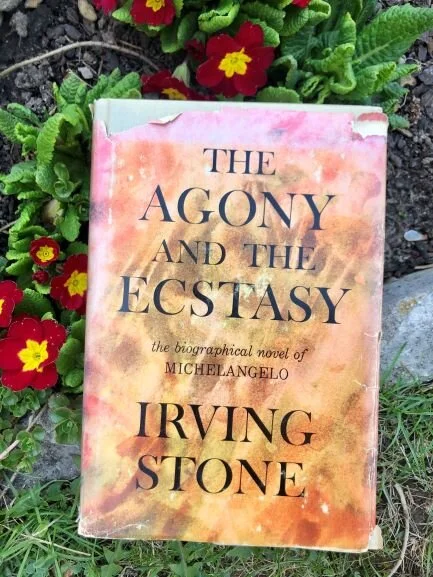
As historical fiction, Irving Stone’s The Agony and the Ecstasy (1961) transports its reader to late fifteenth-/early sixteenth-century Italy as it follows the creative and personal life of Michelangelo Buonarroti.
Set predominately in the far northern town of Vardø, in Finnmark, Norway from 1617-1621, this is a novel punctuated by the harshness of both the natural world and human viciousness. The Mercies fictionalizes historical events. A devastating storm on Christmas Eve of 1617 killed nearly all of the town’s men; Hargrave begins her novel on that day. In the pages that follow she weaves two women’s stories together and The Mercies builds toward brutal witch trials in the years after the great storm.
From its dedication page on, it is clear that Nina George’s The Little Paris Bookshop (2013) addresses grief and mortality. Yet themes of love, human connection and self-healing percolate as the adventures of George’s protagonist bookseller, middle-aged Jean Perdu, develop.
Chimamanda Ngozi Adichie’s Americanah (2013) is a beautiful novel about two Nigerian kids who fall in love but whom life separates as young adults. Adichie’s novel follows the young adult lives of Ifemelu and Obinze, as they grow up in Nigeria, study at Nigerian university, and ultimately find ways to leave Nigeria in the hope of making a better life. Their love story, coupled with their individual experiences maneuvering new cultures and countries, make this novel compelling and illuminating.
Amy Tan’s The Joy Luck Club is a story about the complicated nature of mother-daughter relations, compounded by the unshared, unknown, unspoken backgrounds of the immigrant mothers. The novel takes the reader through all eight women’s perspectives, from late 20th century San Francisco to China many years prior.
Madhuri Vijay’s debut novel The Far Field (2019) transports its reader to modern day India. This novel is a confession by thirty-year-old Shalini. She self-consciously tells her story as she leaves her native Bangalore in search of one man from Kashmir who touched her childhood. Her journey is a sort of coming-of-age even though she is in her mid-twenties when she sets off. Intertwined with her travels, Shalini reflects on her childhood and the lives of her mother and father. Ultimately her trip leads Shalini to the poverty, community, and brutality found in conflict-rife Kashmir.
Reading The Call of the Wild, originally published in 1903, is fast. The novella is only 164 (in the edition I read), and yet, its brevity is part of its magic. Jack London follows the life of Buck, his canine protagonist, from a life of luxury in sunny California, to one of toil in the harsh world of the Alaskan Klondike.
Paul Kalanithi’s When Breath Becomes Air (2016) is a beautiful, and at times heartbreaking, ode to the meaning of life. At the age of 36 and as the final year of his neurosurgical residency began, Kalanithi faced a terminal cancer diagnosis. His response, as embodied by this book, is both brave and thoughtful.
Eowyn Ivey’s The Snow Child (2012) brings a Russian fairytale amidst the Alaskan wilderness. The novel begins in the 1920s when Mabel and Jack, recently transplanted from their native Pennsylvania, face their second winter on their Alaskan homestead.
In Moth Snowstorm: Nature and Joy (2015), British naturalist writer Michael McCarthy mixes memoir and nature writing to present a stimulating, beautiful expose on the link between human joy and the natural world. The book evolves from McCarthy’s environmental argument that nature is the one place in which humans may truly find joy. Looking back at his 1950s childhood in northern England and the ways communing with nature soothed the traumas and chaos of human existence, McCarthy begins this work of nonfiction through memory and memoir.
Book review of Ta-Nahesi Coates’ debut novel The Water Dancer (2019). From its first sentence—the rambling, fluid 100-word sentence/paragraph—Coates establishes The Water Dancer (both in diction and style) as a story about memory and one closely tied to water. This novel eloquently re-frames the Underground Railroad story, placing it in the intimate and profoundly personal experience of his protagonist, Hiram Walker.
Rebecca Makkai’s 2018 novel, The Great Believers, explores themes of trauma, lost generations, parenting, death, emotional inheritance, and the repetition of generational struggles as its weaves two stories throughout. One storyline begins with Yale Tishman in Boystown, Chicago circa the mid-1980s as AIDS lays waste to the gay community. The other takes Fiona (who was a very young woman affiliated with Yale’s world in the mid-‘80s) to Paris in search of her missing adult daughter, Claire, in the year 2015.
Eleanor Oliphant is certainly a socially-awkward, vocabulary-rich, first-person narrator, but her story is not just a witty one. It becomes quickly apparent that Eleanor Oliphant is not completely fine.
Timothy Egan’s The Immortal Irishman: The Irish Revolutionary Who Became an American Hero (2016) tells the life story of Thomas Francis Meagher (pronounced Mar). Egan’s work is a biography albeit one brimming over with adventure. Meagher’s story winds through Irish poets and liberation politicians to the penal colonies of Australia, and finally to life in the United States.